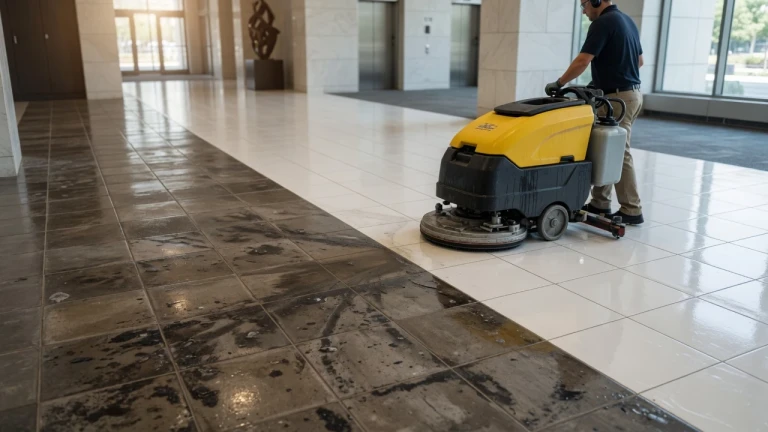
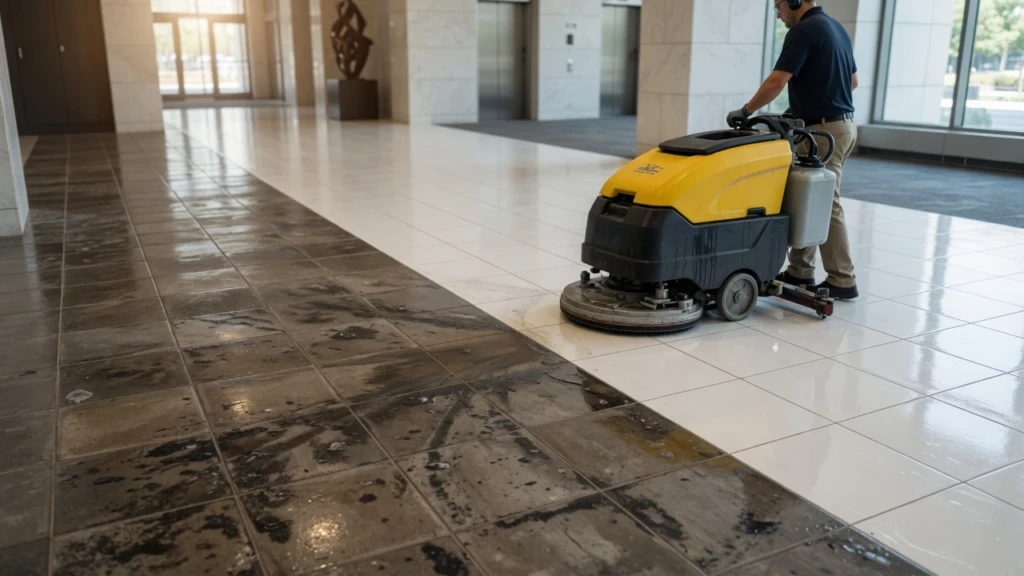
Walk into any warehouse or commercial facility near the Port of LA and look down. The floors tell the real story — not the one in the maintenance budget. Scuffs running the length of a forklift lane. Vinyl tile that went matte years ago and never came back. Concrete that looked sealed last quarter and now looks thirsty. None of it happened suddenly. It happened one gritty boot, one wrong cleaning pass, one skipped maintenance cycle at a time.
Here is the part most facility managers do not realize until the quote lands on their desk: your floors are aging at roughly twice the rate they should be. Not because they are cheap material. Not because the building is old. Because the daily wear-and-tear is being accelerated by three things that are completely fixable.
What Is Actually Killing Your Commercial Floors
Grit and particulate. The twin ports — LA and Long Beach — pump diesel soot, salt air, and fine dust across the Harbor area and South Bay every single day. That particulate settles on floors and gets ground in by foot traffic, pallet jacks, and forklifts. Each pass is like running fine-grit sandpaper over your flooring. On VCT (vinyl composition tile), this strips the factory finish within months. On polished concrete, it micro-scratches the surface until it no longer reflects light.
The wrong cleaning chemicals. Many facilities default to whatever degreaser or all-purpose cleaner the last vendor left behind. The problem: high-pH cleaners eat floor finish. Acidic cleaners etch concrete. Using the wrong product once is no big deal. Using it every night for two years destroys the floor. We have walked into facilities in Orange County where the VCT had turned nearly white — not from age, but from alkaline burn from a cleaner that was never meant for finished flooring.
Skipped maintenance intervals. Every commercial floor surface has a maintenance clock. VCT needs a strip-and-recoat every 6–18 months depending on traffic. Concrete needs resealing every 2–5 years. Carpet tiles in office areas need hot-water extraction quarterly at minimum. Miss one cycle, you are on an accelerated wear path. Miss two, you are looking at restoration instead of maintenance. Miss three, you are pricing replacement.
The Strip-and-Wax Cycle, Explained Without the Jargon
If you have ever nodded along while a flooring vendor talked about “top-scrubbing” and “burnishing” without fully following, here is what actually happens at each stage:
Strip. A chemical stripper is applied to break down the old layers of finish, sealer, and embedded dirt. The slurry is removed with a floor machine and wet vacuum. This step takes the floor back to bare tile. It is messy, it smells, and it is the only way to truly reset a floor that has been neglected.
Seal (optional but recommended). One to two coats of sealer are applied to the bare tile. Sealer penetrates the porous VCT surface and creates a bond layer. Without it, finish sits on top and wears through faster. Many budget vendors skip this step entirely — it saves them an hour and costs you six months of durability.
Wax / Finish. Multiple thin coats of floor finish are applied, each dried before the next goes down. This builds the protective layer you actually see — the gloss, the slip resistance, the surface that takes the daily beating instead of your tile. More coats = longer life. We typically apply 4–6 coats for commercial traffic areas.
Buff / Burnish. Between full strip cycles, high-speed burnishing restores the gloss by friction-heating the top layer of finish and smoothing out micro-scratches. Think of it like polishing a car — you are not repainting, you are restoring the shine of the existing clearcoat. Regular buffing (every 2–4 weeks in high-traffic zones) can extend the life of a strip-and-wax job by months.
Restore vs. Replace: The Math That Matters
Replacing commercial flooring is expensive and disruptive. A 5,000-square-foot VCT floor replacement in the South Bay area runs anywhere from $15,000 to $30,000 depending on the tile grade, and the space is out of commission for days. Concrete polishing or epoxy re-coating is similarly expensive and creates downtime.
A full strip-and-wax restoration on that same 5,000-square-foot floor costs a fraction of that — typically 10–15% of replacement cost — and the space is usable the next morning. Even severely neglected floors, the ones that look like they belong in a tear-down, can often be brought back with the right combination of stripping, spot repair, and a proper finish build. We have restored VCT floors that had not seen a strip in five years. The tile underneath was fine. It just needed someone who would take the time to do the full process, not a quick mop-and-go.
The same math applies to concrete, carpet, and tile-and-grout. Unless the substrate itself is cracked or failed, restoration almost always beats replacement on cost, downtime, and outcome.
A Maintenance Plan That Actually Fits Your Facility
There is no one-size-fits-all floor schedule. A logistics warehouse running two shifts near the port needs a different plan than a professional office in Torrance. The variables that matter:
- Foot and equipment traffic. Forklift lanes wear 3–5× faster than pedestrian walkways. Those lanes need more frequent attention, not just a uniform building-wide schedule.
- Floor surface type. VCT, polished concrete, epoxy, carpet tile, ceramic — each has its own chemistry and frequency requirements. A vendor who only knows one surface type will eventually damage the others.
- Industry. Food-adjacent facilities have different requirements than aerospace cleanrooms or standard commercial offices. The right plan accounts for compliance and audit needs.
- Hours of operation. The work should happen around your schedule, not the other way around. Night and weekend floor crews are standard for a reason — nobody wants a stripping operation running during business hours.
Harbor Cleaning & Maintenance covers all four surface types, and we build the maintenance calendar around your operation. One vendor, one schedule, no finger-pointing when something gets missed.
If your floors are looking dull, scuffed, or just not like they used to, get in touch for a walkthrough and a no-obligation assessment. Most floors have years of life left — they just need the right care. Call us at (424) 772-8580 or request a quote online. We serve Wilmington, the Harbor area, South Bay, and Orange County.