Most facility maintenance calendars were written for a climate Southern California does not have. They assume a hard freeze, a spring thaw, a snowy loading dock. Copy one of those templates into a warehouse near the Port of LA and you will schedule the wrong work at the wrong time all year long — deep-cleaning gutters in a month it never rains, ignoring the marine-layer mildew that is quietly coating your north-facing walls every single morning.
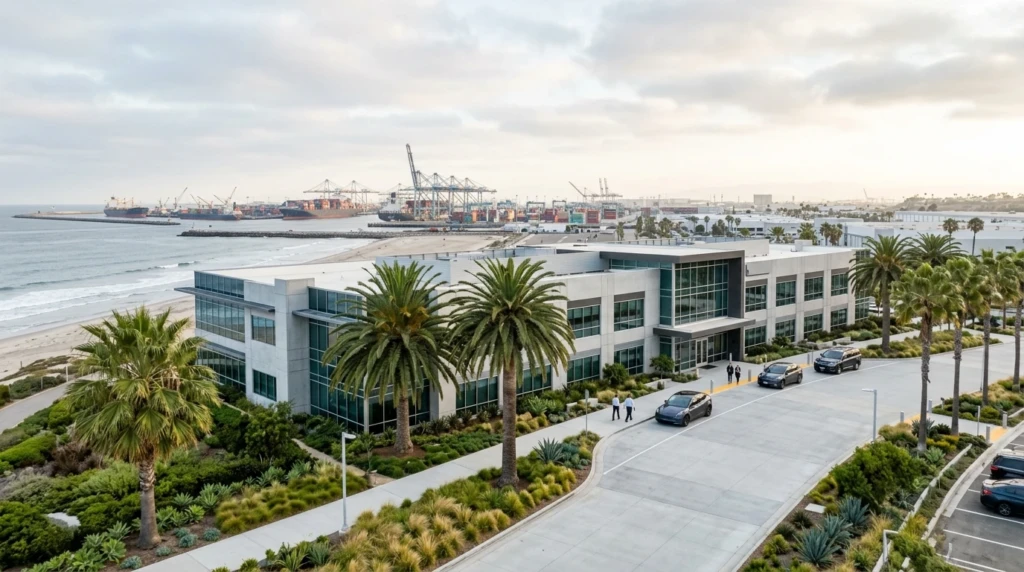
The coastal Harbor corridor has its own rhythm: a damp marine layer, bone-dry Santa Ana winds, a short but intense rainy season, and salt air and diesel soot from the twin ports every day of the year. Build your cleaning schedule around that, and you spend the same budget but get a facility that always looks inspection-ready. Here is a season-by-season commercial cleaning calendar built specifically for facility managers across the Harbor area, South Bay, and coastal Orange County.
Why a Southern California Facility Needs Its Own Cleaning Calendar
Three regional forces drive almost every seasonal maintenance decision on the coast:
- The marine layer. That morning fog is constant moisture. On shaded exteriors, north walls, and awnings it feeds mildew, algae, and that green-black film that makes a building look neglected — heaviest late spring through summer.
- Santa Ana winds. The dry offshore winds of fall and early winter carry fine dust and particulate straight into entryways, HVAC intakes, and across every floor in the building.
- Salt air and diesel soot. The Ports of LA and Long Beach push a corrosive, gritty film across the entire coastal corridor year-round. It never takes a season off, so neither can your fleet washing or exterior maintenance.
Layer the region’s short winter rains on top of that and you get four genuinely distinct seasons of facility work. Here is what to prioritize in each.
Winter (December–February): Rain, Grit, and Entrance Control
The rainy season is short here, but it does the most damage in the least time. Every drop of rain drags port grit, oil, and mud across your thresholds and into the building.
- Protect your floors first. Rain-tracked grit is the fastest way to destroy a finished floor — it acts like sandpaper under every boot and pallet jack. Increase matting, tighten your entrance-cleaning frequency, and move up any planned floor stripping and refinishing so the fresh finish takes the winter beating instead of your bare tile.
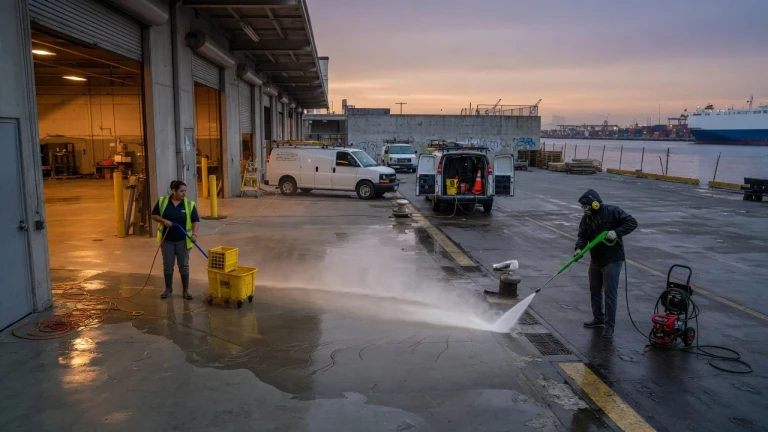
- Clear drainage and hardscape before the storms. Pressure-wash walkways, drive lanes, and loading docks so oil and debris do not turn into slick, staining runoff. This is the season commercial pressure washing earns its keep.
- Watch high-traffic janitorial zones. Wet floors, tracked-in mud, and shorter daylight mean restrooms and entries need closer attention. A flexible janitorial schedule that adds passes during storm weeks beats a rigid contract that cannot flex.
Spring (March–May): The Marine-Layer Deep Clean
As the marine layer thickens, mildew and algae bloom on any surface that stays damp and shaded. Spring is the season to reset the whole building before summer bakes the grime in.
- Soft-wash the exterior. Building faces, awnings, and north-side walls need the right approach — low-pressure soft washing with the correct solution, not a high-PSI blast that drives water behind cladding. Done right, it removes mildew at the root instead of just knocking off the surface.
- Deep-clean the floors. After a winter of grit, spring is ideal for a full strip-and-wax or deep scrub-and-recoat while traffic is moderate. It sets your floors up for the heavy summer season.
- Reset carpets and soft surfaces. Hot-water extraction on office carpet and entry mats pulls out the season’s tracked-in soil before it becomes permanent staining.
Summer (June–August): Peak Grime, Peak Visibility
Summer brings the heaviest marine-layer mildew pressure, the most foot traffic, and the brightest light — which means every streak, smudge, and dull floor is on full display for clients and auditors.
- Stay ahead of mildew regrowth. One spring wash does not last all summer on the coast. Schedule a mid-season exterior check so mildew does not creep back on the shaded elevations.
- Increase fleet washing frequency. Heat bakes salt and diesel film onto vehicles fast. Summer is when a consistent fleet washing cadence protects paint, resale value, and the brand image rolling down the 710. (More on why the port air is so hard on trucks in our piece on what salt air does to your fleet.)
- Keep glass and entrances sharp. High visibility season is the wrong time for filmy windows and a dusty lobby. Tighten the cadence on glass, entries, and customer-facing areas.
Fall (September–November): Santa Ana Dust and the Pre-Rain Reset
The offshore winds arrive and coat everything in fine, dry particulate — then the first rains show up and turn that dust into streaks and mud. Fall is about controlling dust and preparing for winter.
- Ramp up dust control indoors. Santa Ana particulate loads up floors and hard surfaces quickly. More frequent dust mopping, burnishing, and high-touch janitorial passes keep it from grinding into finishes.
- Pressure-wash before the rains. Clear exterior dust, walkways, dumpster pads, and drive lanes now so the first storm does not wash months of grime into a stained mess. A clean slate going into winter pays off through February.
- Book winter floor work early. The best crews fill up before the rainy season. Lock in your floor care and refinishing slots in fall so the finish is down and cured before the wet grit arrives.
The Year-Round Baseline (Every Season, No Exceptions)
Some work is not seasonal — the port air makes sure of it. Regardless of the month, keep these on a steady cadence:
- Recurring janitorial matched to your real traffic, not a generic template.
- Fleet washing on a fixed schedule — salt and diesel corrosion never pause.
- Floor maintenance intervals (buffing, burnishing, spot repair) between the bigger seasonal resets.
- Loading dock, dumpster pad, and drive-lane cleaning to stay ahead of pests, odors, and health inspections.
One Calendar, One Vendor
The hard part of a seasonal plan is not knowing what to do — it is coordinating four different kinds of work across twelve months without something slipping. That is far easier with a single vendor who covers all of it and builds the schedule around your operation. We lay out exactly why that matters in One Vendor, Every Surface.
Harbor Cleaning & Maintenance handles janitorial, floor care, fleet washing, and pressure washing across Wilmington, the Harbor area, South Bay, and Orange County — on one schedule, one invoice, one point of contact. We will build a season-by-season calendar around your facility and simply run it, so you stop reacting to the weather and start staying ahead of it.
Southern California Facility Cleaning: Quick Answers
How often should a commercial facility be deep-cleaned in Southern California? Plan the two big resets around the climate: a spring deep clean and exterior soft wash as the marine layer thickens, and a fall pre-rain wash before the first storms. Recurring janitorial and floor maintenance run continuously between them.
When is the best time to strip and wax commercial floors here? Spring and fall are ideal — moderate traffic and dry weather let the finish cure fully, and getting it down before winter means the fresh coat takes the rainy-season grit instead of your bare tile.
Why does my building keep growing mildew on one side? The coastal marine layer keeps shaded, north-facing surfaces damp long enough for mildew and algae to take hold. It needs periodic soft washing, not a one-time blast, to stay clear through the summer.
Ready to stop guessing at the calendar? Call us at (424) 772-8580 or request a walkthrough, and we will map a seasonal cleaning plan built for your facility and this coastline — and run it for you all year.